Fireproof siding is no longer just an aesthetic choice for California homeowners; it is an absolute necessity for securing home insurance and protecting your family’s largest investment. In recent years, catastrophic wildfires have fundamentally reshaped the real estate landscape across the state. Consequently, insurance carriers have drastically shifted their underwriting guidelines, requiring property owners to adopt stringent home hardening measures. By prioritizing structural resilience through advanced fireproof siding materials like fiber cement, stucco, or architectural steel, you can dramatically lower your vulnerability to airborne embers, ensure ongoing compliance with the latest California Building Code requirements, and ultimately guarantee your property remains protected within high-risk Wildland-Urban Interface (WUI) zones.
When discussing exterior home renovations, the conversation has intensely shifted toward protective remodeling. The surge of extreme weather events requires a critical evolution in how we build and renovate. Installing fireproof siding is one of the most effective strategies to shield your home from the devastating impacts of radiant heat and flying embers that travel miles ahead of the actual flames. In fact, comprehensive studies have repeatedly demonstrated that exterior wall cladding acts as your home's primary line of defense. By making strategic, informed choices about your fireproof siding , you significantly augment your home's defensible space profile. This comprehensive guide details everything you need to know about navigating the complex world of exterior upgrades, understanding code regulations, comparing the top material options, and securing your long-term peace of mind in California.
The California Home Insurance Crisis: Why Fireproof Siding is Now a Necessity
The state of California is currently navigating an unprecedented home insurance crisis, directly triggered by the rising frequency and intensity of annual wildfires. Major insurance carriers have historically incurred multibillion-dollar losses over consecutive seasons. As a result, protecting your dwelling with certified fireproof siding is transitioning from a proactive luxury to a mandated necessity for maintaining baseline coverage. If your home happens to be situated in a designated high-risk environmental region, taking immediate action to fortify your exterior is the only way to retain your policy. The financial and emotional toll of losing a property is immeasurable, bringing the value of robust protective measures sharply into focus.
The Waning Options for Homeowners in High-Risk Zones
Across vast stretches of Southern and Northern California, homeowners are receiving non-renewal notices at alarming rates. Major insurance companies are either restricting their risk portfolios or leaving the state market entirely. Those who reside in elevated fire-hazard severity zones often find themselves entirely devoid of private market coverage options. As traditional avenues close, Californians are frequently forced to seek refuge under the FAIR Plan—a state-mandated insurer of last resort that typically offers exceedingly basic coverage at exorbitant premium costs. To transition back to more comprehensive private policies, homeowners must demonstrate profound property risk mitigation. Upgrading your exterior envelope by opting for fireproof siding is becoming the most effective method to prove to actuaries that your residence is structurally robust and actively mitigating wildfire risk exposure.
How "Home Hardening" Prevents Policy Cancellations and Premium Spikes
The concept of "home hardening" refers to the deliberate process of preparing your home to withstand the brutal assault of a wildfire. Insurance companies utilize advanced algorithmic risk models to evaluate properties. When a home is retrofitted with fireproof siding and other flame-resistant characteristics, its overall risk score drops precipitously. By providing concrete proof of these advanced structural upgrades, such as before-and-after photographs, material certifications, and finalized municipal permits, many homeowners have successfully appealed policy cancellations. Furthermore, investing in premium fireproof siding serves as a vital safeguard against shocking premium spikes, generating long-term financial dividends that significantly offset the initial remodeling expenditure. By proactively managing this aspect of homeownership, you empower yourself against the unpredictable fluctuations of the ongoing insurance crisis.
Understanding California Building Codes and WUI Zones
To fully grasp the critical importance of integrating fireproof siding into your home's architecture, you must understand the rigorous statutory framework that governs California's residential construction. The state government, working in tandem with local fire authorities, has implemented stringent regulatory measures designed to prioritize public safety and limit large-scale community devastation. Navigating these labyrinthine codes requires the expertise of seasoned professionals. A reliable general contractor familiar with local ordinances can assist you in demystifying the specific guidelines that dictate exterior wall assemblies, thereby ensuring that your remodeling investment fully complies with all applicable safety mandates seamlessly.
What is a Wildland-Urban Interface (WUI) Zone?
A Wildland-Urban Interface (WUI) zone represents the transitional boundary or intersection between human development and unoccupied, combustible natural environments. According to the California Department of Forestry and Fire Protection (CAL FIRE), millions of residential dwellings are nestled directly within these high-risk perimeters. A WUI designation significantly alters the foundational rules regarding how a property must be constructed and maintained. Homes located in these areas face an exponentially higher risk of encountering catastrophic wildfire conditions, largely due to the pervasive threat of wind-blown embers that easily ignite vulnerable exterior materials. Consequently, opting for high-quality fireproof siding is paramount for properties located within the WUI, serving as an essential shield against unpredictable environmental hostilities.
Chapter 7A of the California Building Code Explained
At the center of California's robust wildfire defense strategy is Chapter 7A of the California Building Code (CBC). This pioneering legislative document establishes the strict material specifications and construction methodologies legally required within designated Fire Hazard Severity Zones. Chapter 7A dictates that exterior wall assemblies must explicitly demonstrate the ability to resist external flame penetration and severe radiant heat. When evaluating fireproof siding options, it is imperative to verify that the chosen materials meet or exceed Chapter 7A performance tests. This ensures that the siding will not structurally fail or ignite when subjected to intense, prolonged thermal exposure. Understanding and abiding by Chapter 7A constitutes the foundational step toward resilient home hardening and regulatory compliance.
Title 24 Compliance and Exterior Remodeling
In addition to fire resistance, any exterior remodel in California must adhere to Title 24, which encompasses the state's comprehensive energy efficiency standards. The intersection of fire safety and energy efficiency demands careful material selection. High-performance fireproof siding products must simultaneously provide exceptional structural defense against flames and deliver superior thermal insulation to meet Title 24 requirements. For instance, integrating specialized rigid foam insulation beneath your fireproof siding can drastically improve structural home addition efficiency. By harmonizing these dual regulatory requirements, you simultaneously maximize your home's environmental sustainability and dramatically enhance its overall resilience against the looming threat of regional wildfires.
What Exactly is Fireproof Siding?
The term fireproof siding generally refers to exterior wall cladding materials scientifically engineered to withstand extreme temperatures without igniting, combusting, or structurally failing. While it is crucial to recognize that no individual material is entirely impervious to sustained, inferno-level heat indefinitely, modern fireproof siding creates a vital protective barrier. This sophisticated barrier is designed to dramatically slow the progression of flames, effectively preventing the underlying structural framing from reaching its flashpoint. By starving the exterior surface of highly combustible fuel sources, these materials grant occupants crucial evacuation time and significantly augment the probability that the dwelling will survive until professional firefighting personnel arrive to extinguish the broader threat.
Ignition-Resistant vs. Non-Combustible Materials
When selecting your fireproof siding, homeowners must navigate the technical distinction between "ignition-resistant" and truly "non-combustible" materials. Non-combustible materials, such as brick, natural stone, or solid steel, fundamentally lack the organic chemical composition required to sustain a flame under typical atmospheric conditions. In contrast, ignition-resistant materials, such as specialized engineered woods that undergo rigorous chemical pressure treatments, will not ignite easily under standard ember exposure. However, they may eventually degrade or char if exposed to profound, prolonged radiant heat. For maximum peace of mind in high-risk environments, industry experts overwhelmingly encourage homeowners to exclusively select certified non-combustible materials for their primary fireproof siding installation.
The Class A Fire Rating System Explained
The universal benchmark for determining the fire-resistant capabilities of building materials is the standardized Class A fire rating system, established by authoritative testing bodies such as Underwriters Laboratories (UL) and ASTM International. A Class A rating designates the highest possible level of fire resistance available in the market. Materials awarded this prestigious classification exhibit a flame spread index ranging from 0 to 25, meaning they dramatically inhibit the rapid proliferation of fire across a surface. If you are pursuing a full exterior protective remodel, it is legally and practically essential that your chosen fireproof siding possesses an explicit, documented Class A fire rating. This rating is the definitive seal of approval recognized by municipal inspectors and shrewd insurance underwriters.
The Best Fireproof Siding Options for California Homes
Selecting the optimal fireproof siding represents a significant architectural decision that influences your home's aesthetic appeal, required maintenance schedule, and overall thermal efficiency. The modern construction market offers an impressive array of advanced, flame-resistant materials, completely eliminating the need to sacrifice visual elegance for necessary structural safety. By thoroughly evaluating the inherent characteristics of the industry's leading materials, homeowners can confidently pinpoint a solution perfectly tailored to their budget, localized climate conditions, and specific design aspirations. The following sections outline the premier fireproof siding options currently dominating the resilient California construction landscape.
1. Fiber Cement Siding (The Industry Standard)
Fiber cement rapidly emerged as the undisputed industry standard for effective fireproof siding across the United States. Manufactured through a highly controlled, pressurized process that seamlessly blends robust Portland cement, fine silica sand, resilient cellulose fibers, and water, this unique composite material is intrinsically non-combustible. Its incredible versatility allows it to flawlessly mimic the classic texture of natural wood lap boards, organic shingles, or sleek modern panels without carrying any of the associated fire vulnerabilities. Furthermore, fiber cement completely resists warping, rotting, and termite infestations, cementing its status as an exceptionally durable, low-maintenance protective barrier ideal for California's unpredictable climate.
Pros and Cons of James Hardie Board
James Hardie, widely recognized as the market leader in the fiber cement category, formulates specialized products exceptionally tailored to localized climate zones. Hardie board represents an excellent investment for homeowners prioritizing fireproof siding. The profound advantages of this material include its unmatched dimensional stability, exceptional paint adhesion that significantly extends the lifespan of your chosen color palette, and its uncompromisingly tough, non-combustible core. However, the associated disadvantages center primarily around the complex installation process. Given its substantial weight and brittle nature prior to mechanical fastening, Hardie board requires specialized cutting tools and experienced masonry-level craftsmanship to ensure a flawless, warranty-compliant application.
2. Traditional Stucco
Traditional stucco remains a highly revered, deeply historical fireproof siding option uniquely suited to the Californian environment. Composed of a balanced mixture incorporating Portland cement, dense sand, lime, and water, stucco cures into a rigid, stone-like exterior shell that effectively encapsulates the home's structural framing. Because its core ingredients are entirely earthen and inorganic, a properly applied traditional stucco system provides a remarkably effective, uninterrupted barrier against fierce radiant heat and relentless airborne embers. When properly maintained to prevent deep structural fissures, stucco serves as a formidable, exceptionally durable defense mechanism against active wildfires.
Why Stucco Dominates Southern California Architecture
The enduring prominence of stucco across Southern California is intrinsically linked to its unique aesthetic adaptability and incredible thermal performance. From classic Spanish Colonial Revival estates to sleek, geometric modern compounds, this fireproof siding effortlessly accommodates a vast spectrum of architectural profiles. Stucco seamlessly forms around intricate curves and complex angles that defeat rigid board materials. Moreover, the dense mass of a thick stucco layer acts as a highly efficient thermal battery, naturally regulating interior temperatures by slowing the transfer of the region's intense afternoon heat. This dual capacity to effortlessly deflect flames while enhancing daily energy efficiency makes stucco an incredibly logical regional choice.
3. Metal and Steel Siding
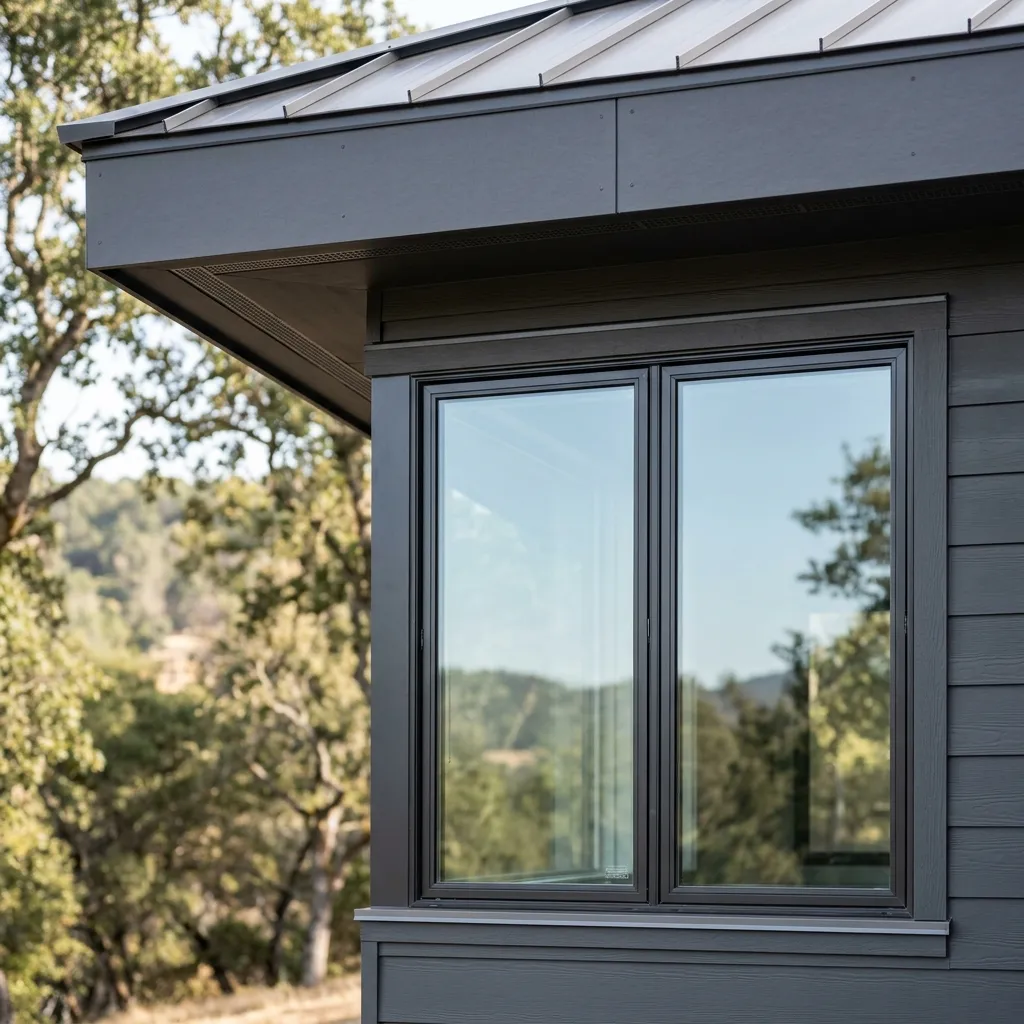
For homeowners aiming to cultivate an aggressively modern, architecturally distinctive aesthetic, premium metal and architectural steel are rapidly gaining traction as a premier fireproof siding choice. Previously relegated exclusively to commercial barns or industrial warehouses, advanced metallurgical engineering has introduced highly sophisticated steel panels designed specifically for luxury residential applications. As a fundamentally non-combustible element, heavy-gauge steel provides an impenetrable, zero-maintenance barrier against flames. High-quality metal siding will perfectly resist the accumulation of lingering, smoldering embers, ensuring your vertical walls actively repel the primary vehicle of wildfire transmission.
Modern Aesthetics Meets Maximum Fire Resistance
The modern integration of metal fireproof siding into residential architecture frequently involves utilizing sleek, concealed-fastener panels or dramatic, standing-seam profiles that effortlessly amplify the visual drama of a property. Advanced, factory-applied, polymer-based coatings ensure that the metal completely resists corrosive rusting, aggressive fading, and unsightly chalking. Available in an extensive spectrum of colors—ranging from sophisticated matte black to warm, hyper-realistic wood grain textures—metal siding offers a striking visual contrast when thoughtfully integrated alongside softer natural materials like robust stone or smooth architectural concrete. Because it effectively reflects intense radiant heat while remaining perpetually non-combustible, metal serves as an uncompromisingly modern protective envelope.
4. Brick and Stone Veneer
Solid brick and dense stone veneer are universally acknowledged as the most inherently ancient and reliable forms of fireproof siding available. Formed almost entirely from earth and subjected to extreme kilns or intense natural pressure, these materials possess an absolute, categorical inability to catch fire. A meticulously installed brick facade or intricate stone veneer provides the thickest, most substantial barrier against direct flame impingement and soaring temperatures. Upgrading your exterior profile with these profoundly rich, heavily textured elements immediately infuses your property with substantial visual gravity and timeless character. Furthermore, combining stone veneer accents seamlessly with other certified materials, such as fiber cement, allows homeowners to strike a perfect balance between robust security, high-end aesthetics, and managed overall project costs.
Siding Materials You Must Strictly Avoid in Wildfire Zones
Just as critical as identifying the optimal fireproof siding is recognizing and deliberately avoiding the materials inherently prone to catastrophic failure. Certain popular, budget-friendly cladding options fundamentally lack any meaningful capacity to successfully endure the aggressive thermal assault characteristic of a localized wildfire. Utilizing these deeply compromised materials within a designated WUI boundary effectively transforms your residence into a hyper-combustible fuel source. By comprehensively understanding the specific chemical limitations of these inferior materials, intelligent homeowners can strictly avoid them, ensuring they do not inadvertently jeopardize their property's structural safety or invite punitive action from vigilant insurance carriers.
The Hidden Dangers of Vinyl Siding in Extreme Heat
Vinyl siding, despite its historical popularity due to its low initial cost and simple installation, presents an extreme, unacceptable hazard within active wildfire environments. Manufactured primarily from synthetic plastic compounds derived from polyvinyl chloride (PVC), vinyl lacks any inherent structural resilience against severe thermal conditions. Even long before direct flames make physical contact with the structure, the intense radiant heat generated by a nearby fire will cause vinyl siding to rapidly warp, distort, and violently melt right off the exterior framing. This catastrophic failure instantly exposes the highly combustible wooden underlayment and structural studs directly to incoming sparks. For this reason, relying on vinyl is the absolute antithesis of achieving functional fireproof siding.
Why Untreated Natural Wood is a Liability
While the rustic, organic charm of an authentic natural wood exterior like classic cedar shakes, redwood lap panels, or intricate log cabin construction is highly desirable, utilizing untreated wood in a high-risk zone is an immense liability. Natural wood is, by its very definition, highly combustible fuel. Unless the lumber has been deeply impregnated with specialized, heavy-duty fire-retardant chemicals within a pressurized environment, raw wood siding will quickly ignite upon contact with a stray, wind-borne ember. Replacing dangerous natural wood with an advanced composite alternative that mimics its exact texture—like premium fiber cement—is universally recognized as an essential, non-negotiable home remodeling upgrade for establishing an effective fireproof siding barrier.
Cost Analysis: How Much Does Fireproof Siding Cost in 2026?
Undertaking a comprehensive exterior renovation designed to integrate premium fireproof siding naturally demands a significant capital commitment. However, when realistically framing this expenditure, one must directly compare the upfront material and intensive labor costs against the profound, long-term financial consequences of an uninsured total property loss or wildly unchecked, skyrocketing premium spikes. Because calculating the precise cost involves a dynamic multitude of specific variables—including the exact square footage of the structure, the complexity of the architectural geometry, and the localized cost of highly skilled labor—homeowners must carefully evaluate realistic localized estimates prior to initiation.
Average Material and Installation Costs per Square Foot
As of 2026, the comprehensive financial landscape surrounding fireproof siding installations reveals varying tiers of investment. Fiber cement siding generally represents the most fiscally balanced, middle-tier option, professionally installed at a cost ranging approximately from $12 to $18 per square foot. High-quality traditional stucco, due to its intensely specialized, multi-layered application process, typically demands between $14 and $20 per square foot. Advanced architectural metal siding commands a slightly higher premium, often landing between $15 to $22 per square foot. Finally, integrating intricate natural stone veneer or authentic solid brick installations exists at the premium spectrum, generally requiring an investment of $25 to appropriately upwards of $40 per square foot due to the profound, artisanal masonry skills required.
Long-Term ROI: Maintenance, Resale Value, and Insurance Savings
The return on investment (ROI) associated with installing fireproof siding extends drastically beyond the initial construction phase. Materials like resilient fiber cement and heavy-duty steel require exponentially less ongoing routine maintenance compared to standard untreated wood, virtually eliminating cyclical repainting and expensive rot remediation. Furthermore, a property equipped with demonstrably hardened infrastructure inherently commands a substantial premium on the fiercely competitive California real estate market. The most immediate, mathematically tangible ROl, however, manifests directly in your annual home insurance statement. The ability to successfully secure a stabilized, private market policy by explicitly demonstrating your home features certified fireproof siding can realistically save homeowners thousands of dollars annually, compounding efficiently over the prolonged lifespan of the dwelling.
The "Whole-Home Hardening" Strategy: Going Beyond Siding
While installing fireproof siding is undeniably the most visually dramatic and structurally significant step toward fortifying your home against disaster, it fundamentally represents only one essential component of a vastly broader, cohesive defense methodology. Adopting a comprehensive "whole-home hardening" strategy acknowledges the critical reality that a chain is ultimately only as strong as its weakest, most vulnerable link. Even the absolute most robust exterior wall cladding can be suddenly compromised if the adjacent architectural features inadvertently act as highly combustible weak points. To genuinely minimize comprehensive vulnerability, proactive homeowners must systematically address all integrated exterior elements to forge a seamlessly unyielding defensive envelope.
Upgrading to Fire-Resistant Eaves and Soffits
The exposed architectural eaves, protruding overhangs, and vulnerable under-soffit areas represent exceptionally notorious traps heavily prone to capturing swirling, wind-driven embers. Because these locations are frequently subjected to intense radiant heat that easily becomes trapped against the exterior wall, they necessitate immediate attention. Hardening your property involves systematically enclosing all open, exposed eaves using explicitly non-combustible materials directly matching your new fireproof siding, such as dense fiber cement panels or smooth architectural metal soffits. Eliminating any exposed raw wood in the under-eave configuration ruthlessly drastically reduces the statistical probability of a structural fire gaining a dangerous foothold in the sensitive attic space overhead.
The Importance of Dual-Paned Tempered Glass Windows
Standard, single-pane glass windows possess an alarming tendency to shatter violently when subjected to the extreme, intense radiant heat generated by a rapidly approaching wildfire canopy. This tragic structural failure instantly permits invasive embers to pour directly inside the home, effortlessly igniting delicate interior furnishings like curtains and upholstery. Consequently, comprehensively upgrading to high-performance, double-paned windows featuring exceptionally strong tempered glass on the outside is just as critical as installing fireproof siding itself. The incredibly robust exterior tempered pane is specifically engineered to endure extreme thermal shifting and intense pressure without catastrophically shattering, essentially operating as a vital, transparent shield complementing your new wall cladding.
Installing Ember-Resistant Roof Vents
Perhaps the single most frequently overlooked vulnerability within an older California residence is the attic ventilation system. Standard, traditional mesh roof vents were explicitly designed simply to prevent small animals and minimal debris from entering the structure; they generally offer zero tangible protection against thousands of microscopic, aggressively smoldering embers. Hardening your property mandates replacing all traditional vents with specialized, modern ember-resistant or actively flame-baffled ventilation models. These highly engineered vents specifically restrict the physical entry of fiery embers while simultaneously maintaining the absolutely crucial airflow required to prevent long-term rot, thereby serving alongside your fireproof siding to fully protect the most vulnerable summit of your valuable structure.
The Installation Process: What to Expect
Transitioning immediately from the meticulous, careful planning phase to the actual execution of a full exterior renovation necessitates a thorough understanding of the overarching construction workflow. Replacing an entire exterior facade with high-performance fireproof siding is a profoundly invasive, multi-phased endeavor that aggressively disrupts standard daily routines. However, working closely alongside a fundamentally organized, highly commutative contracting team allows for a surprisingly streamlined, efficiently managed process. By anticipating the specific logistical requirements, including the management of localized heavy machinery and temporary staging areas, you can significantly mitigate unnecessary stress while ensuring precise adherence to California’s demanding building standards.
Permitting and Local City Approvals in California
California’s famously stringent residential building codes mandate that virtually all comprehensive exterior modifications require an extensive, formal municipal permitting process. Navigating the bureaucratic complexities of localized city approvals is notoriously labyrinthine. A truly qualified exterior contractor will completely manage this vital bureaucratic requirement on your behalf, meticulously submitting the exact engineering schematics, material safety certifications, and specific WUI compliance documentation specifically mandated by Chapter 7A. Operating without these heavily required permits when installing your fireproof siding not only actively risks catastrophic fines and the forceful halting of construction but also thoroughly guarantees that your insurance carrier will outright reject any eventual claims surrounding your hardened upgrades.
Realistic Timelines for a Full Exterior Remodel
A comprehensive home exterior overhaul cannot realistically be accomplished overnight. Depending profoundly upon the exact size of the dwelling, the specific prevailing weather realities, and the precise mechanical complexity of the chosen fireproof siding, a professional installation can easily span an uninterrupted period spanning several rigorous weeks. The primary initial phase involves the highly methodical tear-off and safe physical removal of your dilapidated older cladding, closely accompanied by necessary structural repairs to the vulnerable underlying sheathing framing. Subsequently, the highly meticulous installation of modern vapor barriers, specialized thermal insulation, and the final heavyweight siding panels follows. Selecting a reliable team entirely ensures this complex mechanical timeline is managed proactively, minimizing all unnecessary delays.
Finding the Right Contractor for Your Exterior Remodel
The ultimate efficacy and absolute aesthetic success of your new fireproof siding system are entirely dependent upon the specific caliber of the professionals entrusted with its physical installation. This is decidedly not a project appropriate for amateurs. Handing the reigns to an inexperienced builder is a profound risk that routinely results in devastatingly voided warranties, severe water intrusion points, and a staggering lack of true compliance with WUI safety codes. It is imperative that you meticulously source a highly experienced, deeply vetted local contractor who possesses a long, verifiable history of executing these complex exterior installations within the highly regulated boundaries of California.
Critical Questions to Ask Your Local Builder
Before ever finalizing a binding contractual agreement, intelligent homeowners must aggressively interrogate their prospective contracting firm. First, meticulously demand demonstrable proof of their active status regarding full licensure, comprehensive liability insurance, and up-to-date worker's compensation coverage. Specifically inquire precisely regarding their nuanced understanding of Chapter 7A codes. Furthermore, ask whether their crews have undergone specialized, manufacturer-specific training regimens for explicit brands like James Hardie or advanced metal cladding systems. A fundamentally reputable builder will gladly supply these critical answers, along with an extensive localized portfolio detailing similar high-end fireproof siding transformations demonstrating true craftsmanship.
Why Choose Beyond Builder for Your Fireproof Siding Project
At Beyond Builder, we don't merely install building materials; we methodically construct fortified, incredibly beautiful homes explicitly designed to withstand California's aggressively shifting environmental realities. Our elite team of deeply experienced professionals holds an absolute mastery over the complexities surrounding WUI regulations and cutting-edge fireproof siding implementation techniques. We prioritize a foundation built upon uncompromising structural integrity, transparent, daily client communication, and a ferocious aesthetic attention to the most minute architectural details. If you are entirely ready to permanently safeguard your property, dramatically slash your soaring insurance premiums, and elevate your home's total curb appeal, partnering closely with Beyond Builder guarantees a flawlessly executed transformation resulting in ultimate peace of mind.
Frequently Asked Questions (FAQs) About Fireproof Siding
Will fireproof siding stop a fire completely?
While no organic residential structure is fundamentally 100% immune to an inferno, installing high-quality fireproof siding acts as a massive thermal barrier designed to drastically slow down the aggressive spread of localized flames and forcefully repel microscopic wind-blown embers. This critical defensive posture grants highly crucial extra time for occupant evacuation and frequently determines whether the internal framing is spared or consumed. By eliminating combustible exterior fuel sources, fireproof siding is the single best preventative strategy against profound structural loss.
Do I need a permit to change my siding in California?
Absolutely. Almost without exception across the entire state of California, completely replacing your home's exterior cladding systematically requires a formal municipal building permit. If your specific property happens to reside deeply within a designated WUI zone, the permitting process demands strict, documented adherence to rigorous Chapter 7A material resilience codes. Acquiring the necessary permits ensures safe mechanical compliance and is categorically required to eventually satisfy your attentive home insurance provider.
Can I install fireproof siding over my existing siding?
While physically possible in extremely rare, specific circumstances, industry experts fundamentally advise entirely against installing dense new fireproof siding directly over old, dilapidated exterior cladding. Completely removing the old, compromised siding allows your professional contractor to thoroughly inspect the vulnerable underlying structural sheathing for hidden catastrophic water damage or extensive dry rot. Beginning the installation from a completely clean, newly fortified substrate unconditionally ensures maximum structural stability, guarantees seamless compliance with vital building codes, and protects your comprehensive manufacturer warranty parameters.
Ready to Harden Your Masterpiece?
Protect your California home and lower your insurance premiums with expertly installed fireproof siding.
Get Your Expert Consultation Today