
The concept of this connected ecosystem has drastically evolved in recent years, shifting from mere convenience to essential proactive automation. Gone are the days of basic remote control lights and programmable thermostats. Today, the most effective automated households leverage real-time data, Edge AI, and predictive analytics to make decisions before you even realize you need them. For instance, when searching for the best smart home system, homeowners now prioritize environments that seamlessly integrate energy management, advanced physical security, immersive entertainment, and comprehensive health monitoring. A truly robust setup learns your daily routines, adjusting ambient lighting to match circadian rhythms and optimizing climate controls taking local weather patterns into account. As we explore the top features distinguishing a premium smart home network from outdated alternatives, keep in mind that future-proofing your property is just as crucial as immediate convenience. Early adopters are already experiencing unprecedented levels of comfort and efficiency, transforming how families interact with their living spaces. Embracing the ideal automated environment means investing in peace of mind, knowing that your house acts as an intelligent partner in managing daily life. It is not an exaggeration to state that constructing the best smart home system today lays the foundation for decades of enhanced lifestyle benefits and substantial cost savings.
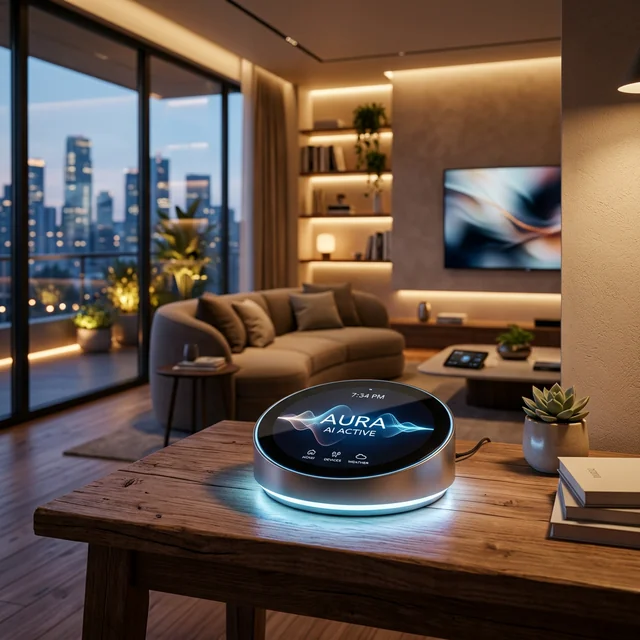
A major factor defining the best smart home system in 2026 is the rapid maturation of the Matter protocol. Specifically, the leap from early iterations to Matter 1.4 and 1.5 has revolutionized how disparate devices communicate. Initially, consumers struggled with fragmented ecosystems—some devices only worked with Apple HomeKit, while others were strictly bound to Google Home or Amazon Alexa. An optimal smart home environment eliminates these silos entirely. With Matter 1.5, we see robust local control, meaning your automated routines will flawlessly execute even if your internet connection temporarily drops. This update introduced official support for high-definition camera streaming and complex energy management modules directly over the protocol. Now, building such intelligent infrastructure doesn't require you to pledge allegiance to a single tech giant. You can mix and match a Roborock vacuum, a Philips Hue lighting array, and a Google Nest thermostat, knowing they will interoperate perfectly. When defining the best smart home system, inter-device communication speed and reliability are paramount. Matter has systematically reduced commissioning failures, accelerated QR code pairing steps, and drastically simplified the ongoing management of dozens of interconnected endpoints.
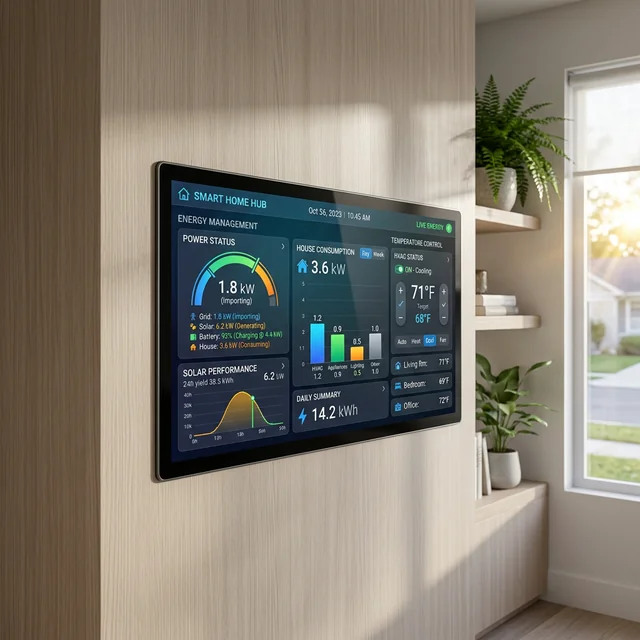
When evaluating the financial return of the ultimate home automation system, predictive energy management stands out as the most lucrative feature. Upgrading from simple programmable thermostats to AI-driven energy hubs changes the entire paradigm of home climate control. The ideal automated environment doesn't just follow a schedule; it anticipates. By analyzing upcoming weather fronts, tracking utility Time-of-Use (TOU) rates, and understanding your house's specific thermal retention curve, the best smart home system pre-cools or pre-heats your environment when electricity is cheapest. In some scenarios, a fully optimized energy framework can reduce annual HVAC expenses by up to 40%. The best smart home system acts essentially as a thermal battery, taking advantage of solar panel generation during peak sunlight hours to manage large appliance loads automatically. Imagine an infrastructure where your dishwasher, EV charger, and water heater communicate with your utility provider, dynamically adjusting their operations to completely avoid peak pricing surges. Building the best smart home system with an emphasis on predictive energy not only benefits your wallet but also significantly lowers your household's overall carbon footprint, contributing to a more sustainable energy grid for the entire community.
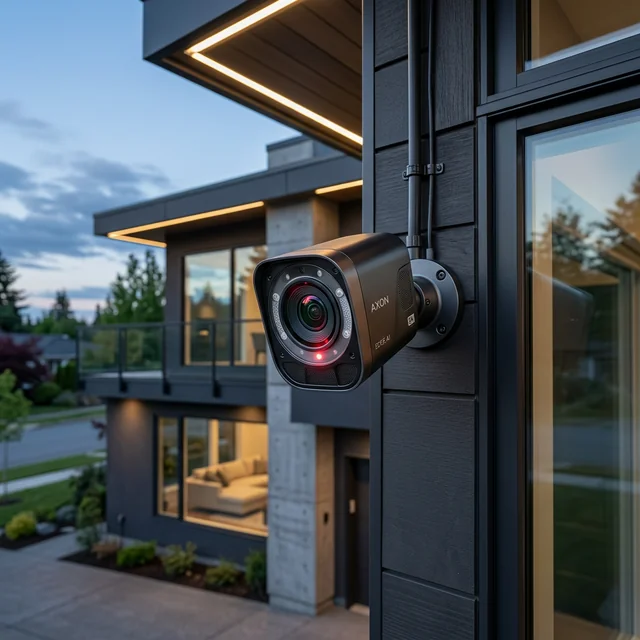
Security has always been a primary driver for adopting the best smart home system, but the focus has shifted from reactive recording to proactive deterrence via Edge AI. In previous generations, cameras relayed video to cloud servers for analysis, resulting in crucial seconds of delay and raising massive privacy concerns. Today, such intelligent infrastructure processes computer vision and audio analytics locally on the device's own neural processing unit. This means this connected ecosystem can identify an unfamiliar face or a lingering loiterer in mere milliseconds, instantly triggering protective measures like locking all deadbolts, flashing exterior lights red, and broadcasting a customized warning message. Crucially, because the best smart home system relies on Edge AI, your sensitive interior video feeds never leave your property. No third-party employee can ever review your footage, which represents the ultimate peace of mind. Moreover, the best smart home system will utilize advanced mmWave presence sensors instead of traditional passive infrared (PIR) detectors, enabling it to distinguish between a pet, a swaying tree branch, and a genuine intruder with zero false alarms. True proactive security stops threats before they cross the threshold.
The culinary realm is another area where the best smart home system demonstrates extraordinary value. Moving beyond simple smart refrigerators with basic touchscreens, sophisticated AI Kitchens have emerged. At the core of a top-tier smart home setup, kitchen technology acts as your personal sous-chef and nutritionist. Advanced inventory tracking cameras log what ingredients are placed in the pantry and refrigerator, tracking expiration dates and suggesting personalized recipes based entirely on what you have available. A fully realized the ultimate home automation system integrates seamlessly with smart ovens that can automatically identify the food you place inside, adjusting temperature, humidity, and cooking time on the fly for perfect results every time. We are seeing major innovations from leaders like Samsung and specialized AI cooking agents that completely redefine meal preparation. Imagine returning home and having the the ultimate home automation system already preheat your oven to the exact required temperature for the meal you selected via your smartphone on your commute. The synergy of automated grocery lists, precision cooking, and energy-efficient appliance operation showcases precisely why investing in the best smart home system dramatically elevates the daily living experience.
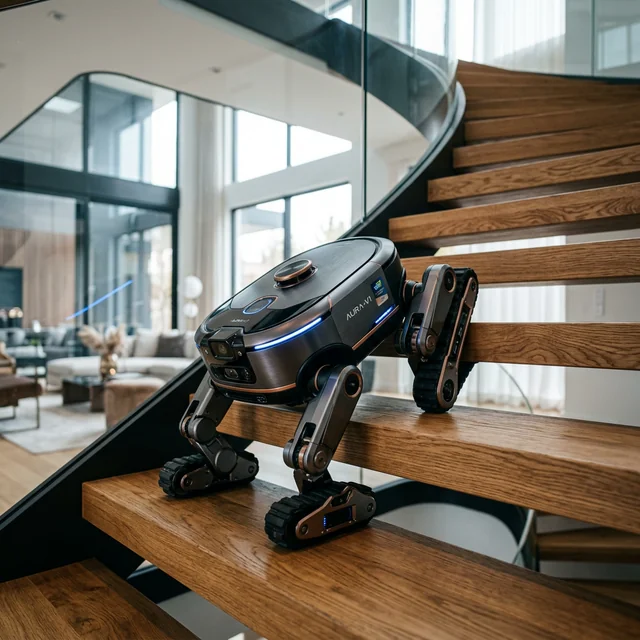
Keeping a vast household immaculate requires constant effort, which is why automated cleaning robotics form a crucial pillar of the best smart home system. CES 2026 revealed extraordinary leaps in this technology, most notably robot vacuums equipped with articulated wheel-legs capable of traversing staircases. Integrating these incredible machines into the best smart home system means an entire multi-level house can be vacuumed and mopped autonomously without any human intervention required to carry the device between floors. Furthermore, the best smart home system coordinates these cleaning cycles with your geographic location and daily routine. When the system detects that all family members have left for work or school, it triggers the deep cleaning routines. Should a pet create a sudden mess, such intelligent infrastructure utilizes AI cameras to identify the spill and dispatch the robot to that exact location immediately. Self-emptying base stations that can also wash and dry mop pads using hot water sterilization ensure hygiene and completely eliminate daily maintenance chores. The sheer convenience of a floorplan that perpetually maintains its own cleanliness is a cornerstone feature of the ultimate home automation system.
In recent iterations, the definition of the best smart home system has broadened to encompass sophisticated health and wellness monitoring. Utilizing non-invasive sensors directly embedded into bathroom fixtures, flooring, and bedroom furniture, the best smart home system passively collects vital health metrics without requiring you to wear a smartwatch or tracker. Smart mirrors can analyze skin health and hydration levels, while advanced smart toilets perform chemical analyses to detect early signs of physiological issues. An elite automation setup can completely transform a master suite into a holistic wellness hub, seamlessly adjusting ambient temperature, white noise generators, and blackout shades based on real-time sleep stage tracking. If an elderly relative is living with you, the best smart home system uses subtle thermal and movement sensors to detect abnormal patterns or potential falls, immediately alerting caregivers without infringing on personal dignity through invasive cameras. The ability to merge physical environment control with physiological wellbeing highlights why the ideal automated environment is increasingly viewed not just as a luxury, but as an essential element of modern health management and preventative care.
A truly transformative aspect of the ultimate home automation system revolves around advanced, biologically-aligned intelligent lighting. Moving far beyond simple remote toggles and dimmers, the best smart home system actively manages the color temperature and intensity of your indoor illumination to match the natural progression of the sun. This circadian lighting approach has profoundly positive effects on mood, productivity, and sleep quality. During the morning, such intelligent infrastructure floods key areas with cool, blue-enriched light that naturally suppresses melatonin, energizing the household. As evening approaches, an optimal smart home environment seamlessly transitions the environment to warm, amber tones, preparing the brain for restful sleep. Industry leaders like Lutron are continuously pushing the boundaries of what the best smart home system can achieve visually, integrating motorized shading that works in perfect harmony with artificial light fixtures to maximize natural daylight harvesting. The sheer aesthetic elegance of a home that perfectly lights itself anticipating your path through the hallways is a magical experience that continuously reaffirms the immense value embedded within the best smart home system.
When the workday ends, the best smart home system effortlessly pivots to become an awe-inspiring entertainment hub. Recent advancements in generative AI, such as GoogleTV integrating Gemini, have revolutionized how we interact with media. The best smart home system allows you to use sophisticated, conversational language to search for highly specific content—rather than remembering a movie title, you might simply ask for "that 90s sci-fi movie with the red pill." The best smart home system harmonizes your visual and audio environment, automatically dimming overhead lights, closing smart blinds, and calibrating the soundbar equalization the moment you press play. High-end multi-room audio ensures that whether you are hosting a lively dinner party or simply enjoying a quiet podcast, the audio perfectly follows you from the kitchen to the patio. An optimal smart home environment ensures seamless handoffs between devices, creating an interconnected web of entertainment where lag, complicated remotes, and buffering are relics of the past. Utilizing these deeply integrated, AI-driven assistants proves that the ultimate home automation system makes technological interaction feel intuitively human.
Implementing a premium smart home network can initially seem daunting given the complex landscape of competing protocols, varying price points, and installation requirements. However, approaching the project systematically virtually guarantees success. First, to establish the best smart home system, you must prioritize a robust, enterprise-grade Wi-Fi and networking backbone; no smart device will function optimally on a weak wireless signal. Following that, choosing a unified privacy-first local hub ensures that you are building this connected ecosystem on a foundation of security and speed. While DIY starter kits serve wonderfully for small apartments, scaling an optimal smart home environment for a sprawling estate frequently demands professional integration to ensure seamless wiring and optimized mmWave sensor placement. Homeowners must constantly weigh the benefits of wired infrastructure over battery-powered wireless nodes. The best smart home system elegantly mixes the reliability of hardwired panels with the flexibility of cutting-edge Thread and zigbee wireless endpoints. Ultimately, designing the best smart home system requires balancing immediate lifestyle enhancement goals with future-proof hardware architectures that adapt as new innovations inevitably emerge.
The concept of the best smart home system has drastically evolved in recent years, shifting from mere convenience to essential proactive automation. Gone are the days of basic remote control lights and programmable thermostats. Today, the most effective automated households leverage real-time data, Edge AI, and predictive analytics to make decisions before you even realize you need them. For instance, when searching for the best smart home system, homeowners now prioritize environments that seamlessly integrate energy management, advanced physical security, immersive entertainment, and comprehensive health monitoring. A truly robust setup learns your daily routines, adjusting ambient lighting to match circadian rhythms and optimizing climate controls taking local weather patterns into account. As we explore the top features distinguishing the best smart home system from outdated alternatives, keep in mind that future-proofing your property is just as crucial as immediate convenience. Early adopters are already experiencing unprecedented levels of comfort and efficiency, transforming how families interact with their living spaces. Embracing the best smart home system means investing in peace of mind, knowing that your house acts as an intelligent partner in managing daily life. It is not an exaggeration to state that constructing the best smart home system today lays the foundation for decades of enhanced lifestyle benefits and substantial cost savings.
A major factor defining the best smart home system in 2026 is the rapid maturation of the Matter protocol. Specifically, the leap from early iterations to Matter 1.4 and 1.5 has revolutionized how disparate devices communicate. Initially, consumers struggled with fragmented ecosystems—some devices only worked with Apple HomeKit, while others were strictly bound to Google Home or Amazon Alexa. The best smart home system eliminates these silos entirely. With Matter 1.5, we see robust local control, meaning your automated routines will flawlessly execute even if your internet connection temporarily drops. This update introduced official support for high-definition camera streaming and complex energy management modules directly over the protocol. Now, building an elite automation setup doesn't require you to pledge allegiance to a single tech giant. You can mix and match a Roborock vacuum, a Philips Hue lighting array, and a Google Nest thermostat, knowing they will interoperate perfectly. When defining the best smart home system, inter-device communication speed and reliability are paramount. Matter has systematically reduced commissioning failures, accelerated QR code pairing steps, and drastically simplified the ongoing management of dozens of interconnected endpoints.
When evaluating the financial return of the best smart home system, predictive energy management stands out as the most lucrative feature. Upgrading from simple programmable thermostats to AI-driven energy hubs changes the entire paradigm of home climate control. The the ultimate home automation system doesn't just follow a schedule; it anticipates. By analyzing upcoming weather fronts, tracking utility Time-of-Use (TOU) rates, and understanding your house's specific thermal retention curve, the a top-tier smart home setup pre-cools or pre-heats your environment when electricity is cheapest. In some scenarios, a fully optimized energy framework can reduce annual HVAC expenses by up to 40%. The best smart home system acts essentially as a thermal battery, taking advantage of solar panel generation during peak sunlight hours to manage large appliance loads automatically. Imagine an infrastructure where your dishwasher, EV charger, and water heater communicate with your utility provider, dynamically adjusting their operations to completely avoid peak pricing surges. Building such intelligent infrastructure with an emphasis on predictive energy not only benefits your wallet but also significantly lowers your household's overall carbon footprint, contributing to a more sustainable energy grid for the entire community.
Security has always been a primary driver for adopting an optimal smart home environment, but the focus has shifted from reactive recording to proactive deterrence via Edge AI. In previous generations, cameras relayed video to cloud servers for analysis, resulting in crucial seconds of delay and raising massive privacy concerns. Today, a top-tier smart home setup processes computer vision and audio analytics locally on the device's own neural processing unit. This means the such intelligent infrastructure can identify an unfamiliar face or a lingering loiterer in mere milliseconds, instantly triggering protective measures like locking all deadbolts, flashing exterior lights red, and broadcasting a customized warning message. Crucially, because the best smart home system relies on Edge AI, your sensitive interior video feeds never leave your property. No third-party employee can ever review your footage, which represents the ultimate peace of mind. Moreover, an elite automation setup will utilize advanced mmWave presence sensors instead of traditional passive infrared (PIR) detectors, enabling it to distinguish between a pet, a swaying tree branch, and a genuine intruder with zero false alarms. True proactive security stops threats before they cross the threshold.
The culinary realm is another area where the ultimate home automation system demonstrates extraordinary value. Moving beyond simple smart refrigerators with basic touchscreens, sophisticated AI Kitchens have emerged. At the core of the ideal automated environment, kitchen technology acts as your personal sous-chef and nutritionist. Advanced inventory tracking cameras log what ingredients are placed in the pantry and refrigerator, tracking expiration dates and suggesting personalized recipes based entirely on what you have available. A fully realized best smart home system integrates seamlessly with smart ovens that can automatically identify the food you place inside, adjusting temperature, humidity, and cooking time on the fly for perfect results every time. We are seeing major innovations from leaders like Samsung and specialized AI cooking agents that completely redefine meal preparation. Imagine returning home and having the a premium smart home network already preheat your oven to the exact required temperature for the meal you selected via your smartphone on your commute. The synergy of automated grocery lists, precision cooking, and energy-efficient appliance operation showcases precisely why investing in a premium smart home network dramatically elevates the daily living experience.
Keeping a vast household immaculate requires constant effort, which is why automated cleaning robotics form a crucial pillar of the best smart home system. CES 2026 revealed extraordinary leaps in this technology, most notably robot vacuums equipped with articulated wheel-legs capable of traversing staircases. Integrating these incredible machines into the best smart home system means an entire multi-level house can be vacuumed and mopped autonomously without any human intervention required to carry the device between floors. Furthermore, the best smart home system coordinates these cleaning cycles with your geographic location and daily routine. When the system detects that all family members have left for work or school, it triggers the deep cleaning routines. Should a pet create a sudden mess, such intelligent infrastructure utilizes AI cameras to identify the spill and dispatch the robot to that exact location immediately. Self-emptying base stations that can also wash and dry mop pads using hot water sterilization ensure hygiene and completely eliminate daily maintenance chores. The sheer convenience of a floorplan that perpetually maintains its own cleanliness is a cornerstone feature of the best smart home system.
In recent iterations, the definition of the ideal automated environment has broadened to encompass sophisticated health and wellness monitoring. Utilizing non-invasive sensors directly embedded into bathroom fixtures, flooring, and bedroom furniture, the best smart home system passively collects vital health metrics without requiring you to wear a smartwatch or tracker. Smart mirrors can analyze skin health and hydration levels, while advanced smart toilets perform chemical analyses to detect early signs of physiological issues. The best smart home system can completely transform a master suite into a holistic wellness hub, seamlessly adjusting ambient temperature, white noise generators, and blackout shades based on real-time sleep stage tracking. If an elderly relative is living with you, the best smart home system uses subtle thermal and movement sensors to detect abnormal patterns or potential falls, immediately alerting caregivers without infringing on personal dignity through invasive cameras. The ability to merge physical environment control with physiological wellbeing highlights why such intelligent infrastructure is increasingly viewed not just as a luxury, but as an essential element of modern health management and preventative care.
A truly transformative aspect of the this connected ecosystem revolves around advanced, biologically-aligned intelligent lighting. Moving far beyond simple remote toggles and dimmers, an elite automation setup actively manages the color temperature and intensity of your indoor illumination to match the natural progression of the sun. This circadian lighting approach has profoundly positive effects on mood, productivity, and sleep quality. During the morning, the best smart home system floods key areas with cool, blue-enriched light that naturally suppresses melatonin, energizing the household. As evening approaches, this connected ecosystem seamlessly transitions the environment to warm, amber tones, preparing the brain for restful sleep. Industry leaders like Lutron are continuously pushing the boundaries of what the ultimate home automation system can achieve visually, integrating motorized shading that works in perfect harmony with artificial light fixtures to maximize natural daylight harvesting. The sheer aesthetic elegance of a home that perfectly lights itself anticipating your path through the hallways is a magical experience that continuously reaffirms the immense value embedded within an elite automation setup.
When the workday ends, the best smart home system effortlessly pivots to become an awe-inspiring entertainment hub. Recent advancements in generative AI, such as GoogleTV integrating Gemini, have revolutionized how we interact with media. The best smart home system allows you to use sophisticated, conversational language to search for highly specific content—rather than remembering a movie title, you might simply ask for "that 90s sci-fi movie with the red pill." The best smart home system harmonizes your visual and audio environment, automatically dimming overhead lights, closing smart blinds, and calibrating the soundbar equalization the moment you press play. High-end multi-room audio ensures that whether you are hosting a lively dinner party or simply enjoying a quiet podcast, the audio perfectly follows you from the kitchen to the patio. An optimal smart home environment ensures seamless handoffs between devices, creating an interconnected web of entertainment where lag, complicated remotes, and buffering are relics of the past. Utilizing these deeply integrated, AI-driven assistants proves that such intelligent infrastructure makes technological interaction feel intuitively human.
Implementing the best smart home system can initially seem daunting given the complex landscape of competing protocols, varying price points, and installation requirements. However, approaching the project systematically virtually guarantees success. First, to establish an optimal smart home environment, you must prioritize a robust, enterprise-grade Wi-Fi and networking backbone; no smart device will function optimally on a weak wireless signal. Following that, choosing a unified privacy-first local hub ensures that you are building the ideal automated environment on a foundation of security and speed. While DIY starter kits serve wonderfully for small apartments, scaling the best smart home system for a sprawling estate frequently demands professional integration to ensure seamless wiring and optimized mmWave sensor placement. Homeowners must constantly weigh the benefits of wired infrastructure over battery-powered wireless nodes. The ideal automated environment elegantly mixes the reliability of hardwired panels with the flexibility of cutting-edge Thread and zigbee wireless endpoints. Ultimately, designing the best smart home system requires balancing immediate lifestyle enhancement goals with future-proof hardware architectures that adapt as new innovations inevitably emerge.
An optimal smart home environment can range from $2,500 for robust DIY starter packages utilizing local hubs to upwards of $75,000 for fully hardwired, professionally integrated enterprise-grade setups utilizing the absolute best smart home system components.
Thanks to the latest Matter updates and a heavy industry shift toward Edge AI, such intelligent infrastructure will perform the vast majority of its critical automation and security routines entirely locally, meaning it functions smoothly even during internet outages.
Beyond Builder Los Angeles SoCal is a premier construction and remodeling company proudly serving homeowners and businesses across the Greater Los Angeles and Southern California region. We specialize in home remodeling, commercial build outs, room additions, kitchen and bathroom renovations, custom construction, and full restoration services.
With a highly skilled team committed to superior craftsmanship, transparent communication, and timely project delivery, Beyond Builder Los Angeles SoCal provides reliable, high quality construction solutions tailored to your vision. Whether you're planning a full home remodel, expanding your living space, or upgrading a commercial property, we ensure exceptional results from concept to completion.