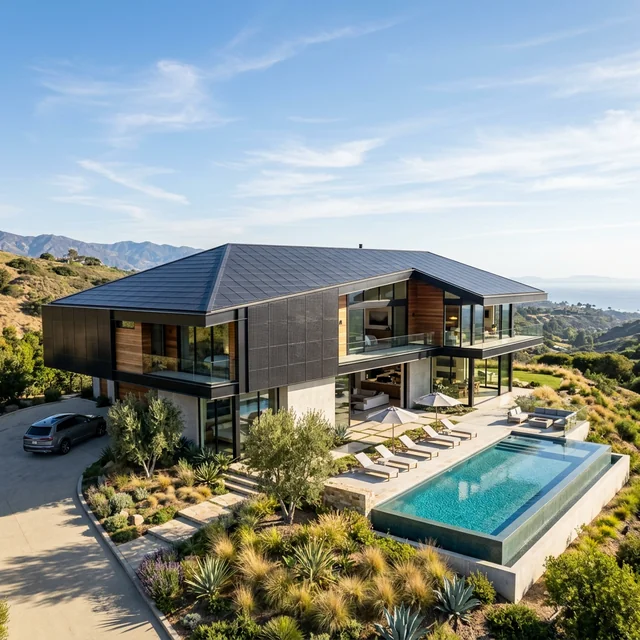
Solar panel installation has officially entered a revolutionary new phase, profoundly changing the architectural landscape across California and the United States. For decades, the process of adopting clean, renewable residential energy primarily meant bolting obtrusive, heavy equipment onto your otherwise beautiful roof. Homeowners were consistently forced to choose between optimal environmental sustainability and pristine, uncompromised exterior aesthetics. Today, however, the conversation has shifted dramatically. Instead of merely attaching power-generating modules onto a finished structure as an afterthought, visionary builders are seamlessly integrating high-performance photovoltaics directly into the fundamental building envelope from day one.
Whether you are planning a comprehensive luxury home remodel in Los Angeles, constructing a custom estate from the ground up, or simply looking to upgrade your property's energy efficiency to meet strict California green building standards, understanding the latest advancements in building-integrated photovoltaics (BIPV) is crucial. BIPV materials do not simply add to a house; they actively replace traditional building components—serving as windows, facades, roofs, and even walkways—while simultaneously generating abundant, clean electricity. In the highly competitive and eco-conscious market of Southern California, embracing these dual-purpose solar innovations is no longer just an environmental statement; it is a vital strategy for maximizing real estate value, achieving deep energy independence, and future-proofing your home against rising utility rates and grid instability.
1. Rethinking The Paradigm of Solar Panel Installation
For many homeowners, the concept of a typical solar panel installation immediately brings to mind thick aluminum framing, visible wiring conduits, and glaring blue-black rectangles bolted above Spanish tiles or asphalt shingles. While standard active rooftop solar systems have undeniably paved the way for renewable energy adoption and significantly reduced carbon footprints worldwide, they usually represent a significant architectural compromise. A home’s exterior aesthetic is often dominated or completely disrupted by these functional but visually imposing systems. However, the future of renewable energy architecture embraces integration over addition.
The U.S. Department of Energy (DOE) emphasizes that expanding solar power opportunities beyond basic rooftops is the key to mainstream adoption in high-density urban and suburban areas. By incorporating solar technology into structures from the design phase, architects and contractors can utilize vast, previously untapped surface areas. According to the DOE's official overview on expanding solar energy opportunities, shifting solar generation from standard roof racks to integrated awnings, skylights, vertical facades, and specialized fenestration opens up gigawatts of untapped generation potential.
The Core Philosophy of Dual-Use Photovoltaic Technologies
The magic of modern building-integrated systems lies in their multifaceted utility. Standard building materials have one job: keep the elements out. In contrast, dual-use photovoltaic technologies replace conventional construction materials—such as glass windows, exterior wall cladding, or roofing tiles—while simultaneously capturing the sun’s energy. The DOE thoroughly defines dual-use photovoltaics as technologies designed to perform a distinct secondary function alongside electricity generation. They act as structural components, thermal insulators, and weather barriers, fundamentally altering how we calculate the return on investment (ROI) for a home remodel.
When you replace traditional sliding glass doors or a masonry facade with high-tech solar equivalents, you are effectively offsetting the initial cost of the standard building materials you no longer need to purchase. You are buying the wall and the power plant in a single, elegant package. This paradigm shift requires a more sophisticated approach from your general contractor, as the installation merges electrical engineering directly with structural execution.
2. Official Data: The Economic Reality of BIPV
While the aesthetic advantages of camouflaged and integrated solar arrays are obvious to any homeowner or designer, the financial viability of these systems in the residential sector has historically been a point of debate. Early iterations of BIPV were notoriously expensive, relegating them strictly to experimental projects or massive corporate headquarters. However, advances in manufacturing, specifically the widespread scaling of thin-film photovoltaics and multi-wire silicon cell technologies, have drastically altered the financial landscape.
In a comprehensive study on BIPV adoption, the National Renewable Energy Laboratory (NREL) explored the exact pricing structures and market hurdles facing these innovative systems. The NREL research on BIPV in the residential sector highlights that while the upfront material costs of BIPV remain slightly higher than traditional racking systems, the integrated nature of the products significantly reduces labor redundancy and material overlap during new construction or major remodeling. For instance, when a home requires a total roof replacement, installing solar shingles simultaneously acts as the new roofing membrane and the solar generator. By analyzing the life-cycle costs, property value appreciation, and ongoing electricity savings, NREL data indicates that residential BIPV is rapidly moving toward price parity with conventional solar applications, especially in premium energy markets like California.
Fraunhofer ISE: Pioneering Building-Integrated Photovoltaics
To truly understand how this technology is engineered for high performance, we must look at the groundbreaking research conducted by the Fraunhofer Institute for Solar Energy Systems (ISE), one of the leading solar research outfits globally. The experts at Fraunhofer ISE explicitly detail how custom-designed BIPV modules don't just generate power; they dramatically improve the building's thermal envelope. By precisely engineering the space between solar cells and incorporating insulating glass units (IGUs), these modules provide superior thermal insulation and critical climate protection against Los Angeles heatwaves.
One of their most fascinating initiatives is the Design2PV project. This research focuses heavily on the development of semi-transparent solar modules and invisible solar cells. By utilizing cutting-edge multi-wire technology, Fraunhofer researchers can fabricate complex, highly efficient solar arrays where the internal wiring is nearly invisible to the naked eye. This allows for the creation of translucent canopies, pergolas, and structural skylights that filter bright sunlight perfectly while silently harvesting energy, proving that high design and high performance are no longer mutually exclusive.
3. The Aesthetic Angle: Solar Glass and Smart Windows
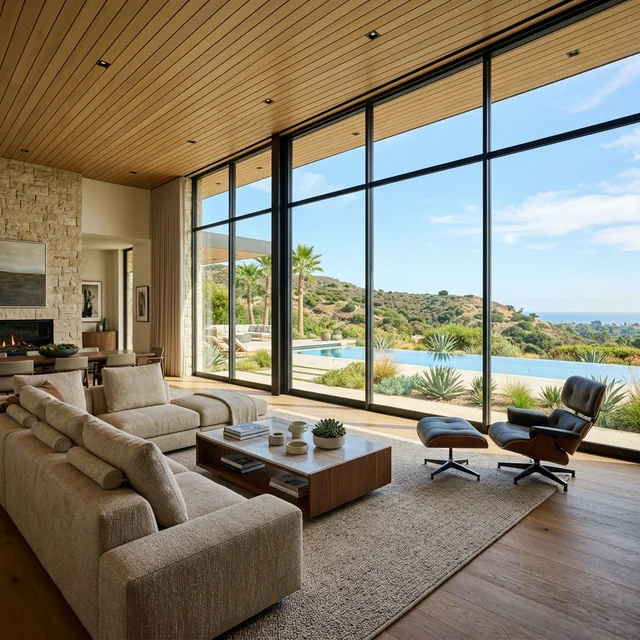
Perhaps the most exciting leap forward in the realm of renewable architecture is the evolution of photovoltaic solar glass. For decades, architects dreamed of skyscrapers and luxury homes entirely clad in glass that could secretly power the building. Today, that dream is a fully commercialized reality, and it presents an extraordinary aesthetic angle perfectly tailored for upscale residential designs.
When you speak with high-end clients planning to remodel their Los Angeles homes, the primary concern is almost always maximizing natural illumination. California living is defined by blurring the lines between indoor and outdoor spaces through massive, floor-to-ceiling fenestrations. The incredible benefit of solar glass is that clients no longer have to sacrifice luminous, modern design to achieve impressive energy efficiency.
Onyx Solar: The Technical Superiority of PV Glass
Onyx Solar stands as a global leader in the production of architectural photovoltaic glass. Their materials do far more than just convert sunlight into AC current. As detailed in their technical breakdown of PV glass benefits, these advanced glazing solutions dynamically filter ultraviolet (UV) and infrared (IR) radiation. This drastically improves the "Solar Factor" of the building—essentially meaning the glass blocks the invisible light spectrums that cause heat gain and bleach your expensive interior furniture, while allowing visible light to wash into the room. This dual-action reduces the need for aggressive air conditioning, compounding the energy savings provided by the actual electricity generation.
Furthermore, Onyx Solar produces highly efficient crystalline silicon photovoltaic glass. For clients who demand the maximum nominal power per square meter, these modules utilize high-efficiency crystalline cells sandwiched between tempered safety glass. They can be integrated into skylights, sunrooms, and large-scale canopies, providing a striking grid-like architectural shadow play while generating exceptional wattage per square foot.
Curtain Walls vs. Spandrel Glass
In the context of larger residential structures or modern mixed-use properties, the integration of solar technology into curtain walls is transforming building design. Onyx Solar clearly delineates the difference between passive facades and active energy-generating envelopes in their curtain wall applications guide. A traditional spandrel glass (the opaque glass used between floors to hide structural elements and HVAC ducting) sits passively, merely absorbing heat. By replacing standard spandrel glass with opaque thin-film or crystalline solar panels, thousands of square feet of previously "dead" exterior space instantly become an active power plant covering the entire vertical face of the structure.
Ubiquitous Energy and Uncompromised Transparency
But what about the windows you actually want to look through perfectly? Enter Ubiquitous Energy. Their revolutionary UE Power Technology has achieved what was once considered science fiction: completely transparent solar panels. Unlike older semi-transparent modules that cast a heavy gray or brown tint over the view, UE Power utilizes advanced organic semiconductor materials applied as a microscopic coating to standard window glass. This proprietary coating is specifically engineered to harvest only the non-visible UV and infrared light spectrums, passing the visible spectrum straight through to the human eye. The result is a window that looks completely normal, incredibly clear, yet secretly routes direct current power into the home's electrical grid.
4. Architectural Facades: The New Frontier of Solar Panel Installation
While glass addresses the fenestration of a home, what about the solid walls? For luxury residential projects or high-end commercial buildings striving to achieve stringent LEED Platinum or Net-Zero Energy certifications, every square inch of the exterior envelope counts. This is where camouflaged solar facades come into play, redefining the visual possibilities of a professional solar panel installation.
Mitrex: Camouflaged Energy Generation
One of the persistent challenges with vertical solar integration has been aesthetics. If a homeowner desires a beautiful natural stone exterior or a warm timber-clad finish, standard blue solar panels are out of the question. Mitrex has completely revolutionized this space by creating customizable solar facades. Using a patented manufacturing process, Mitrex applies a highly durable, specialized facing to standard photovoltaic modules. This facing meticulously mimics a vast array of high-end architectural textures, including raw concrete, authentic red brick, elegant granite, and natural wood grain.
To the naked eye—and even up close—these facades look identical to traditional high-end cladding materials. Yet, they function as high-efficiency solar modules. This technology allows architects to clad an entire multi-story residence in "wood" or "marble," entirely eliminating visual friction while transforming the entire exterior into a massive energy harvesting plant. Additionally, Mitrex offers customizable solar glass where the tint, transparency, and geometric patterning can be uniquely adjusted for use in modern balconies, exterior railings, and privacy screens.
Overcoming Integration Challenges
Despite these incredible advancements, integrating these systems requires meticulous planning, an advanced understanding of local building codes, and specialized general contractors. The DOE's extensive Request for Information on BIPV challenges provides a granular breakdown of the technical hurdles the industry currently faces. These include standardizing building code approvals, training electrical contractors for building-envelope integration, and ensuring that structural fire ratings are perfectly maintained. Only premier, highly experienced installation teams possess the capability to navigate this complex intersection of heavy structural remodeling and advanced renewable energy engineering.
If you need inspiration for what a successfully executed, cutting-edge solar panel installation looks like on an architectural masterpiece, ArchDaily maintains an incredible, curated gallery of BIPV integration projects. These fully realized, completed homes and buildings stand as a testament to the fact that renewable energy technology can drastically elevate, rather than detract from, luxury design.
Moreover, the concept of the circular economy is beginning to shape BIPV research. The Fraunhofer institute's MASS-IPV project (Massive Integration in Infrastructure) explores precisely how intelligent energy systems can be elegantly integrated into existing building envelopes during historic remodels or structural retrofits, ensuring that older homes can meet modern net-zero standards without losing their original architectural charm.
5. Walkable Energy: Transforming Your Driveway with Solar Pavement
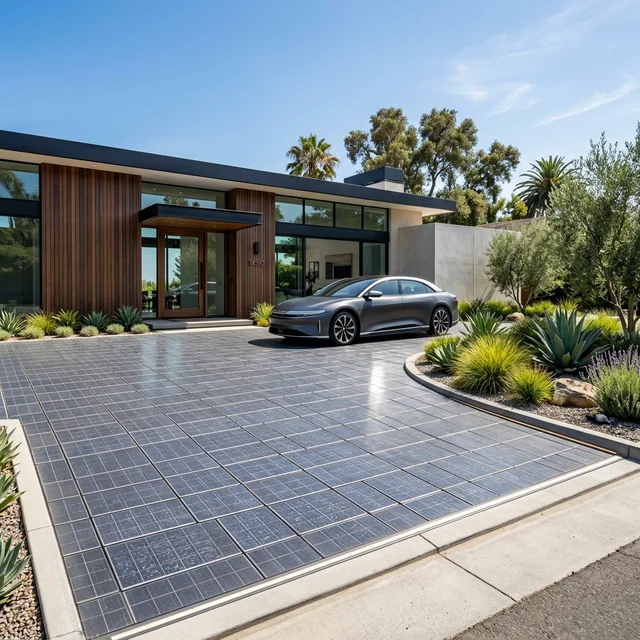
Perhaps one of the most futuristic, show-stopping concepts in exterior residential design is the advent of solar paving. When we think of capturing solar energy, we naturally look up towards the sky, evaluating the roof and vertical walls. However, massive amounts of completely unshaded square footage exist directly beneath our feet: our driveways, garden pathways, wrap-around patios, and pool terraces. Engineering a solar panel installation that you can literally drive a heavy SUV over is an astonishing feat of material science.
Platio: Engineering Sustainable Solar Pavers
Platio Solar has emerged as a vanguard in this rapidly evolving niche. Their comprehensive solar pavement technology centers around highly durable, interlocking tiles designed specifically for ground-level application. The structural core of these pavers is ingeniously manufactured from recycled plastic waste—making the product inherently sustainable even before it generates its first watt of electricity. High-performing monocrystalline silicon solar cells are securely encased within this rugged, non-slip, tempered glass and plastic composite structure.
The safety and durability metrics of these systems are exceptional. As Platio details in their guide to residential solar pavers, these units are specifically engineered to withstand immense structural loads. They are completely safe to install in high-traffic residential driveways because they can easily support the weight of heavy, fully loaded passenger vehicles and electric trucks without cracking or suffering micro-fractures in the internal solar cells. Furthermore, because these systems are modular and interlocked at ground level, maintenance and the replacement of individual damaged tiles are remarkably straightforward compared to high-altitude rooftop repairs.
For Los Angeles homeowners undertaking comprehensive landscape design or hardscaping overhauls, integrating solar pavers provides a stunning, high-tech aesthetic that acts an incredible conversation starter while practically contributing to the home's total energy ecosystem.
6. Industry Trends: The Horizon of Solar Panel Installation
To truly grasp where the residential energy market in California is heading by 2026 and beyond, it is vital to stay tapped into the pulse of specialized, deep-industry journalism. A well-executed solar panel installation today is fundamentally different from what it was just three years ago, and the speed of innovation is only accelerating.
- Tracking Global Innovation: For the absolute latest news regarding the worldwide release of bleeding-edge structural photovoltaic materials, the exclusive BIPV section of PV Magazine is an invaluable resource. This publication tracks weekly announcements of new material chemistries, efficiency breakthroughs, and European trends that inevitably define the high-end California market a few months later.
- The Contractor's Technical Perspective: Navigating the logistical realities of securing permits, managing complex supply chains, and executing flawless on-site installations requires deep technical knowledge. Articles found within the Solar Power World BIPV category highlight the specific challenges and incredible victories experienced by advanced general contractors dealing with these futuristic materials daily on active job sites.
- The Intersection of Design and Technology: Ultimately, these systems must look exquisite. Dezeen's deeply curated tag dedicated to solar design provides endless vanguard concepts showcasing how elite exterior and interior designers are forcefully crossing technology with breathtaking artistry, resulting in homes that look like they belong in the next century.
The Ultimate Benchmark in Roof Resilience: Tesla Solar Roof
Of course, no comprehensive discussion of modern building-integrated solar technology is truly complete without mentioning the Tesla Solar Roof. While extremely well-known, revisiting the exact specifications from the core source yields crucial selling arguments for the California market. Tesla’s tempered solar glass tiles are engineered to be structurally superior to standard roofing tiles. Their exceptional resistance to high-velocity hail impacts and, most critically, their Class A fire rating make them an incredibly persuasive and practical investment for homes situated near California’s beautiful but highly fire-prone canyons, hillsides, and wildland-urban interface zones.
When you integrate the unparalleled fire resistance of a modern solar roof with the structural beauty of camouflaged facades and the futuristic novelty of transparent smart windows, the result is a home that is almost entirely self-sustaining, remarkably safe, and visually spectacular.
7. Why Beyond Builder is the Right Partner for Your Solar Panel Installation
Reading about these incredible technological advancements is one thing; successfully executing a flawless, code-compliant, and beautifully designed solar panel installation using these complex materials is an entirely different reality. The standard roofing crew or local electrician is generally not equipped to handle the structural nuances, complex permitting requirements, and fine architectural finishing required for advanced BIPV projects like transparent solar curtain walls or walkable solar driveways.
If you are planning a high-end custom home build or an exhaustive whole-house remodel in Los Angeles, you need a general contractor who fundamentally understands that the future of construction relies on the exact intersection of premium luxury design and cutting-edge energy engineering. Every solar panel installation undertaken with these advanced building materials must be treated as a holistic, architectural endeavor.
At Beyond Builder, we pride ourselves on staying miles ahead of the latest industry trends. By partnering directly with the world's leading manufacturers of photovoltaic glass, solar facades, and integrated roofing systems, we ensure our clients have exclusive access to the most sophisticated materials available in the California market. We seamlessly blend complex electrical engineering into our luxury remodeling process, guaranteeing that your new Net-Zero home not only drastically reduces your monthly utility bills and increases your property value, but does so with unparalleled structural elegance and architectural beauty.
Ready to Revolutionize Your Home's Energy?
Don't compromise on your home's aesthetic to achieve energy independence. Contact Beyond Builder today to discuss integrating the world's most advanced BIPV technologies into your upcoming California home remodel.
Schedule a Free Energy Architecture Consultation